Over the past decade, I have read poems that were, in many ways, memoirs of everyday people. Not memoirs in the traditional sense, but little records of ordinary life: poems about growing up, falling in love, losing someone, being broke, leaving home, finding faith, questioning God, navigating friendship, surviving heartbreak, watching a country change. Some of these poems would not necessarily fit neatly into what certain literary journals consider good poetry or worthy themes. And perhaps that is precisely why I have become increasingly interested in them. Because poetry is not only an art form. Sometimes, it is evidence. It is one of the ways people leave traces of themselves behind.
A poem can tell us what a person felt at a particular moment in history in a way that a newspaper report, census or official document never could. It can preserve the language people used to describe their fears, the things they desired, the things they could not say plainly. In that sense, these poems are part of the DNA of history.
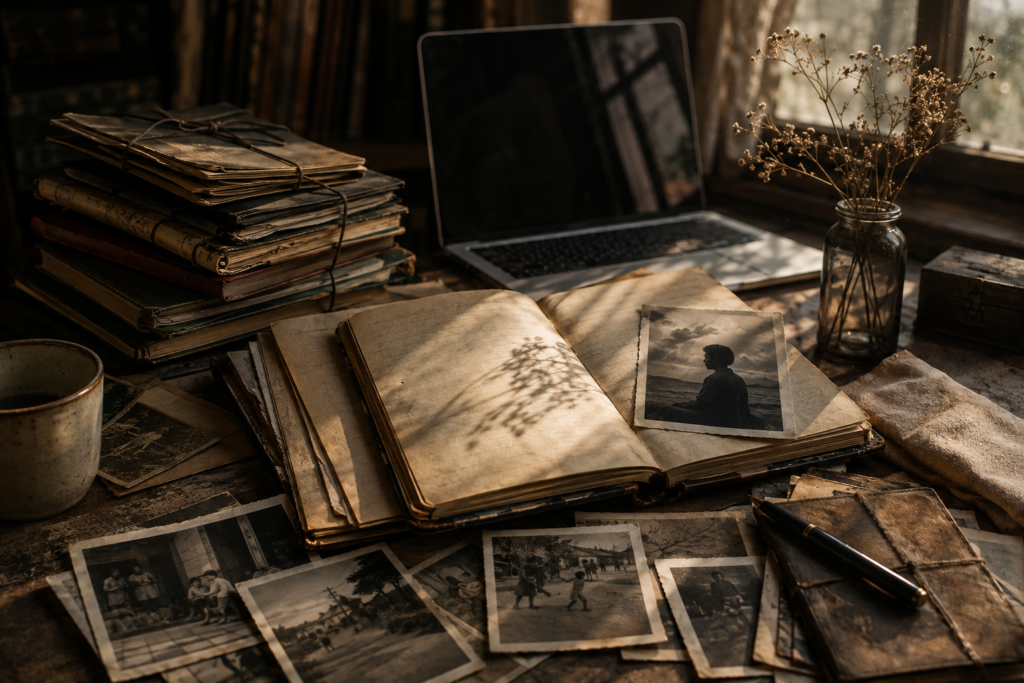
But history has always had a preservation problem. What survives is rarely determined only by what existed. It is also determined by what we considered worthy of keeping. Over time, access, money and proximity to institutions begin to matter. Some people have publishers, literary journals willing to take their work, editors, festivals, archives and communities that help their work circulate. Others simply write. They post a poem on an old blog. Keep it in a notebook. Perform it once. Send it to a friend. Save it in a folder on a computer that eventually dies.
Then years pass. The blog disappears. The notebook is lost. The hard drive fails. The account is forgotten. And with it goes a small piece of somebody’s history.
This is why we are working on a project to host old poems on our website. It is not simply an attempt to build an archive of poetry. It is an attempt at remembrance. We want to preserve poems that may otherwise disappear, particularly the poems that exist outside the structures that usually determine what gets remembered.
Because I do not think access should determine memory. I do not think the ability to pay for publication should determine whether someone’s account of love, grief, childhood, faith or everyday life remains available to the future. And I do not think literary recognition should be the only test for whether a poem deserves to survive.
Some poems will be celebrated. Others will simply remain. I think there is value in both.
A poem does not have to be a masterpiece to tell us something about the person who wrote it, or the world in which they wrote it. Perhaps fifty years from now, someone will read one of these poems and find nothing extraordinary in its literary construction. But they may discover something else: a way of speaking, a way of loving, a way of grieving, a way of seeing the world. A small record of what it meant to be alive at a particular time.
That matters.
Because remembrance is not only about preserving the things we already know are important. Sometimes, it is about refusing to let the ordinary disappear simply because nobody had the resources, access or foresight to preserve it.
That is the work we are beginning: a small digital home for old poems. A place for the poems that survived in notebooks, forgotten folders, old blogs and personal archives. A place where they can remain.
Because these poems may not all belong in the canon.
But they belong to the record.