
The Art of Being Alone: Reclaiming the Self in a World That Fears Solitude
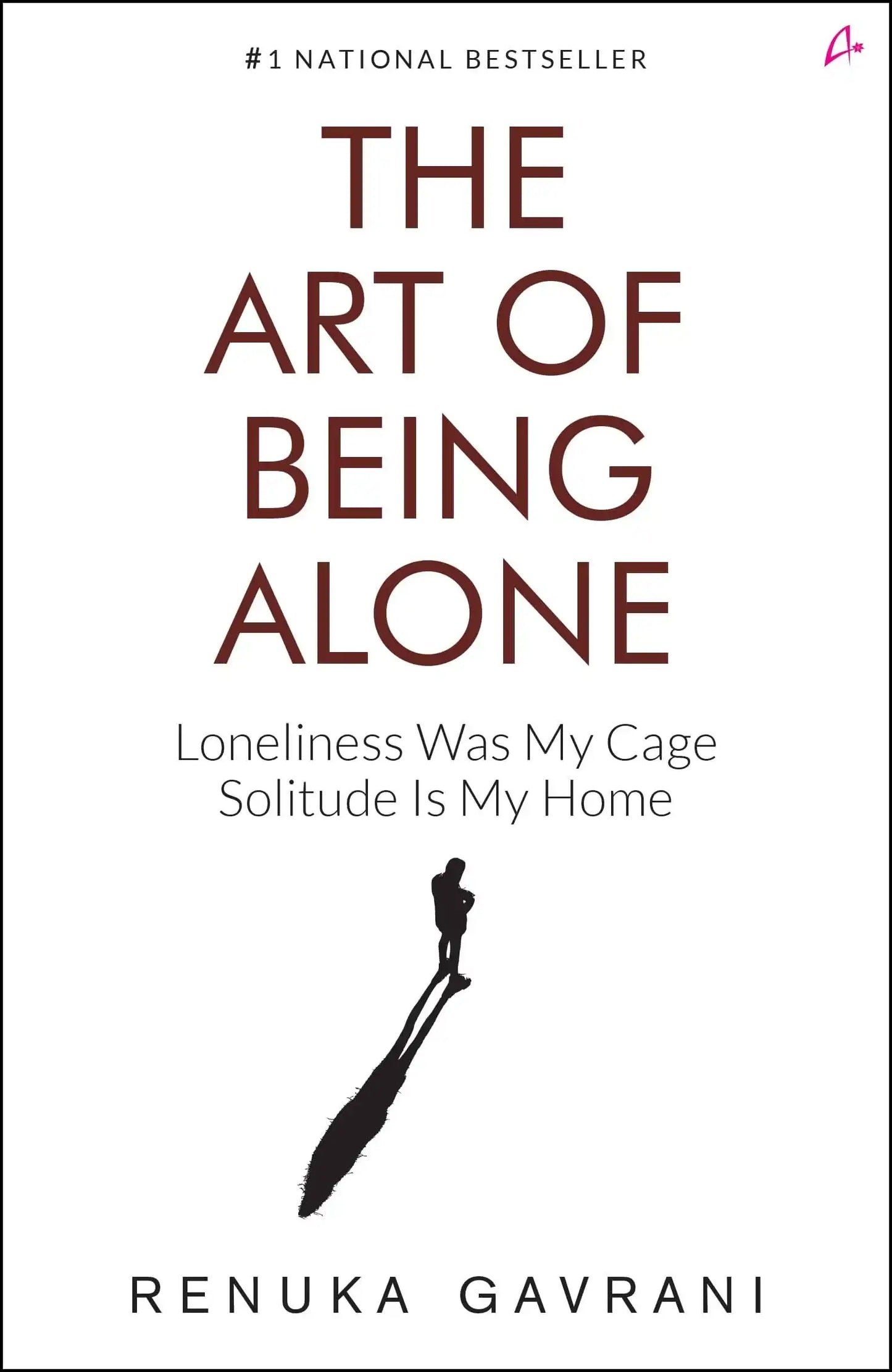
In a world increasingly defined by digital connectivity, social expectations and the relentless pursuit of belonging, being alone has become an experience many people struggle to embrace. From the pressure to maintain friendships to the anxiety of appearing socially undesirable, contemporary life often treats solitude as evidence of something missing. Against this cultural backdrop, Renuka Gavrani’s The Art of Being Alone: Loneliness Was My Cage, Solitude Is My Home offers a compelling invitation to reconsider the relationship between solitude, loneliness and personal development. The book challenges readers to question whether the discomfort they associate with being alone originates in their circumstances or in the meanings society has taught them to attach to those circumstances.
At the heart of Gavrani’s argument is a distinction that gives the book its conceptual foundation: being alone is not necessarily the same as feeling lonely. Although the two experiences may overlap, they are not interchangeable. Physical isolation describes the absence of other people, whereas loneliness concerns the emotional experience of disconnection. Solitude, by contrast, can become a deliberate and meaningful engagement with oneself. Through this distinction, Gavrani encourages readers to reconsider the assumption that a person’s life is diminished by the absence of constant companionship.
This argument is particularly relevant in a culture where social acceptance is frequently mistaken for personal fulfilment. Many individuals organise their identities around the desire to be liked, included and recognised. Their decisions, interests and even expressions of personality may gradually become shaped by the expectations of others. The fear of exclusion can become so influential that authenticity is sacrificed for approval. Gavrani’s central concern is that, in attempting to become acceptable to everyone else, people risk becoming strangers to themselves.
The Social Construction of Loneliness
One of the book’s most recognisable insights is its examination of how early social experiences influence our understanding of being alone. Childhood narratives often portray the isolated individual as unfortunate, unpopular or in need of rescue. The child who sits alone may be regarded with pity, while the socially popular child is celebrated as successful. Such representations can establish a troubling association between companionship and worthiness.
Gavrani challenges this association by questioning the assumptions beneath it. Why should a person’s value depend on how many people surround them? Why should being unaccompanied automatically suggest rejection? And why do people sometimes feel compelled to maintain relationships that offer little emotional nourishment simply because being alone appears worse?
These questions expose an important psychological tension: the difference between wanting meaningful relationships and needing other people to validate one’s existence. Human beings are inherently relational, and belonging is a legitimate emotional need. Nevertheless, the desire for connection becomes problematic when acceptance requires the abandonment of personal convictions, interests or individuality.
The book’s argument is therefore most persuasive when understood not as a rejection of human connection but as a challenge to dependence on external approval. It encourages readers to examine the motivations behind their relationships and recognise that popularity, intimacy and genuine belonging are not necessarily the same thing.
From Loneliness to Solitude
The distinction between loneliness and solitude provides the framework for the book’s broader message of self-discovery. Gavrani invites readers to approach time alone as an opportunity to become acquainted with their thoughts, desires, fears and aspirations. Rather than immediately filling every quiet moment with entertainment or social interaction, individuals can learn to tolerate silence and use it for reflection.
This proposition carries considerable significance in an age of constant digital stimulation. Social media provides endless opportunities to observe other people’s experiences, compare personal circumstances and seek reassurance through external reactions. Although digital platforms can facilitate genuine connection, they can also intensify feelings of inadequacy when users interpret the visibility of others’ social lives as evidence of their own exclusion.
Solitude offers a possible interruption to this cycle. Time spent away from the expectations of an audience can create room for questions that are easily neglected amid daily distractions. What do I genuinely value? Which ambitions belong to me, and which have I adopted to gain approval? What kind of life would I pursue if I were less concerned with how it appeared to other people?
These questions transform solitude from a passive condition into a potentially productive practice. They also reveal that self-knowledge is not acquired merely by withdrawing from others; it requires the willingness to examine oneself honestly.
Personal Growth and the Discipline of Self-Discovery
Beyond changing the reader’s perception of loneliness, Gavrani presents solitude as an opportunity for personal development. Time alone can support reflection, clarify priorities and create space for pursuing neglected ambitions. It can also help individuals recognise patterns of behaviour that remain unnoticed when their attention is constantly directed towards other people.
This aspect of the book is particularly valuable because it moves the discussion beyond emotional reassurance. Feeling comfortable alone is not necessarily the ultimate objective. The deeper opportunity lies in using that experience to develop greater self-awareness and make more intentional decisions.
However, an important qualification is necessary. Solitude does not automatically produce growth. A person can spend considerable time alone while remaining trapped in destructive thought patterns, unresolved resentment or excessive self-criticism. Without reflection, constructive habits and purposeful action, isolation may simply become another environment in which unhelpful patterns persist.
Consequently, the most productive interpretation of Gavrani’s message is that solitude creates an opportunity for growth rather than guaranteeing it. Readers must actively determine what they will do with the space it provides. Self-discovery requires more than withdrawing from external distractions; it demands intellectual honesty, emotional maturity and a willingness to change.
Style, Accessibility and the Book’s Appeal
Gavrani’s approach belongs to the accessible tradition of contemporary self-help literature, in which personal observations and relatable experiences are used to communicate ideas about identity and emotional well-being. The book’s central premise is easy to understand, and its subject matter speaks to a broad audience, particularly readers navigating rejection, changing friendships, personal transitions or the pressure to conform.
Its strength lies in the familiarity of the problem it addresses. The fear of being perceived as unwanted is not confined to a particular age group or social environment. It may influence adolescents seeking acceptance, young adults navigating relationships, professionals negotiating workplace expectations and individuals rebuilding their lives after separation or disappointment.
The book’s central metaphor is equally effective. The contrast between a cage and a home presents loneliness as a condition experienced through restriction and solitude as a space that can eventually offer belonging. The metaphor suggests that the external circumstance of being alone does not have to determine the internal experience of that condition. A person may begin by feeling trapped in their own company and gradually discover that the same space can become a place of reflection, stability and renewal.
Nevertheless, the accessibility of the book’s central message also presents a limitation. The distinction between loneliness and solitude, while useful, can become overly neat if readers interpret it as a simple matter of changing their mindset. Loneliness may arise from bereavement, exclusion, disability, displacement, depression, poverty or the absence of supportive relationships. These circumstances cannot always be resolved through positive thinking or personal discipline.
A more comprehensive understanding of loneliness must acknowledge both its internal and external dimensions. Sometimes the individual needs to develop a healthier relationship with solitude; at other times, the necessary response is to seek community, professional support or more supportive social conditions. Recognising this distinction prevents the celebration of solitude from becoming an unintended dismissal of genuine emotional suffering.
The Limits of Self-Sufficiency
Perhaps the most important question raised by the book’s philosophy concerns the relationship between self-sufficiency and interdependence. Learning to enjoy one’s own company can reduce the temptation to remain in unhealthy relationships merely to avoid being alone. It can also help individuals establish boundaries and develop a more stable sense of identity.
Yet emotional independence should not be confused with the belief that people do not need one another. Healthy relationships provide companionship, accountability, encouragement and forms of understanding that solitary reflection cannot entirely reproduce. The ability to enjoy solitude and the ability to participate meaningfully in relationships are complementary rather than opposing capacities.
The strongest application of Gavrani’s message, therefore, is not withdrawal from the world but greater freedom within it. A person who is comfortable alone may be better positioned to choose relationships based on mutual respect and genuine affection rather than desperation or fear. Such a person can value companionship without treating it as proof of personal worth.
This distinction gives the book a significance beyond individual self-improvement. It encourages readers to imagine relationships in which connection is chosen freely, rather than pursued compulsively to escape the discomfort of confronting oneself.
Conclusion
The Art of Being Alone is a timely contribution to conversations about self-awareness, belonging and personal growth. Renuka Gavrani challenges the assumption that being alone necessarily signifies failure and invites readers to reconsider the value of their own company. Her central message is particularly relevant to individuals whose identities have become entangled with the pursuit of approval or whose fear of rejection has influenced their personal choices.
The book’s greatest strength is its encouragement to approach solitude with curiosity rather than shame. Its principal limitation is that the celebration of being alone must be balanced against the reality that loneliness can involve circumstances requiring meaningful human connection and, sometimes, professional assistance. Neither personal development nor emotional well-being can be reduced to a single philosophy.
Ultimately, the significance of the book lies in the possibility it presents: that time spent alone need not be experienced solely as absence. It can become an opportunity to examine one’s values, recover neglected ambitions and cultivate a more honest relationship with oneself.
The ability to be alone does not eliminate the need for belonging. Instead, it may change the terms on which belonging is pursued. When companionship is no longer treated as the sole evidence of worth, relationships can become choices rooted in affection, respect and shared purpose. And when solitude is approached with intention, it can become not a substitute for life with others, but a meaningful part of living well.
Gavrani’s work ultimately invites readers to reconsider a question that extends beyond loneliness: can we learn to remain in our own company without interpreting that experience as evidence that something is wrong with us? The answer begins with recognising that a life of value is not measured by the number of people present in every moment, but by the quality of the relationships we cultivate, including the one we maintain with ourselves.
Book Details
Title: The Art of Being Alone: Loneliness Was My Cage, Solitude Is My Home
Author: Renuka Gavrani
Publisher: Amaryllis, an imprint of Manjul Publishing House
Publication date: 25 December 2023 (Amaryllis edition)
Genre: Self-help, personal development and psychology
Gabriel Ebiere Blessing
About the reviewer
Gabriel Ebiere Blessing is a Nigerian writer and spoken-word artist whose work interrogates the complexities of human existence, faith, identity, and the delicate intersections between personal experience and collective realities. Her writing is characterised by emotional depth, contemplative inquiry, and a keen sensitivity to the unspoken narratives that shape human lives. Her work reflects a sustained interest in the transformative possibilities of words and their capacity to deepen human understanding.