
Technological advancements always force us to rethink what we do, how we do it, and why we do it. Each major breakthrough reshapes industries, displacing certain roles while creating new ones. With the rise of Generative AI (Gen AI), we are once again faced with a fundamental shift — one that challenges us to redefine creativity itself.
Historical Cycle of Displacement and Reinvention
Every industrial revolution has diminished the need for human labor in certain sectors, but it has also freed people to take on grander challenges. The tractor eliminated the necessity of manual farming on a large scale, allowing humanity to focus on science, technology, and industry. Similarly, the printing press made manual transcription obsolete but gave birth to mass literacy, journalism, and entirely new literary movements.
Art has followed the same trajectory. Before the advent of the camera, an artist’s primary role was to capture life-like representations. When photography made that function redundant, artistic innovation shifted toward abstraction, surrealism, and impressionism. The introduction of new technology did not destroy creativity — it expanded it.
Gen AI as a Catalyst, Not a Competitor
If Gen AI reaches a peak where it can “do” creativity the way we do today — generating art, music, literature, and design at a human-like level — some may fear that human creativity will become obsolete. But history suggests a different outcome: when the boundaries of possibility shift, humans push further, unlocking new dimensions of artistic and intellectual expression.
Rather than replacing human ingenuity, Gen AI may serve as a collaborator, expanding our creative potential in ways we have yet to fully explore. Creativity is not just about producing outputs — it is deeply tied to human intent, emotions, and lived experiences. The future of creativity will likely move beyond execution and toward new forms of meaning-making. Interactive storytelling, personalized artistic experiences, and deeply human narratives that AI cannot independently generate may define the next wave of artistic evolution.

Challenges and Considerations
While the future of creativity remains promising, certain concerns must be addressed:
- Creativity vs. Automation — The assumption that human creativity will simply “shift” must be examined critically. If AI can generate compelling creative works at scale, how will human artists differentiate themselves? Will we value creativity based on process, intent, or exclusivity rather than just the final product? Will we become a cult that puts a premium on Human creativity?
- The Human Element of Art — True creativity is more than just output — it is the result of human experiences, struggles, and perspectives. AI can replicate patterns and styles, but can it create art that resonates on an emotional and cultural level? The next phase of artistic evolution may not just be about aesthetics but about embedding irreplaceable human context. If Gen AI is taught to recognise patterns of what humans have created, when humans branch off the usual to carve a new path, will that survive? Will we have a new generation of human art purists, creating forms of artistic expression that is keep of the radar of AI.
- Economic Displacement and New Opportunities — As AI automates creative tasks, there is a real risk of displacing artists, writers, musicians, and designers. The challenge is ensuring that the evolution of creativity includes viable pathways for human creators. Will AI help democratize creativity, giving more people access to tools for expression, or will it centralize artistic production in the hands of a few? Either way we must adapt and learn to survive. The movie Hidden figures shows how learning fortran coding was essential to reducing the vulnerability of human computers to mechanical ones.
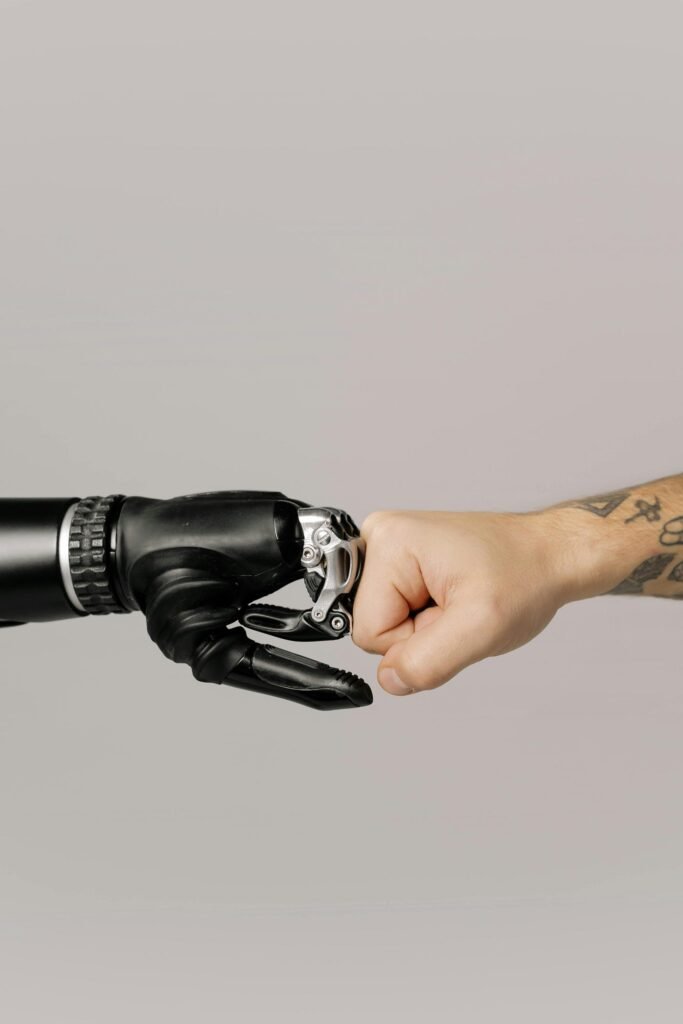
A Future of Collaboration, Not Competition
Rather than viewing AI as an adversary to creativity, we must explore how it can serve as a tool for deeper artistic exploration. Human artists could shift toward curating, shaping, and personalizing AI-generated content, ensuring that technology enhances rather than replaces creativity. The greatest creative breakthroughs may come not from AI working alone, but from AI augmenting human imagination, making complex ideas more accessible, and pushing the boundaries of what is possible.
The rise of Gen AI is not an “onslaught” that threatens human creativity — it is an inflection point that challenges us to evolve. Just as every technological leap before it forced us to redefine artistic and intellectual pursuits, AI will push us toward new creative frontiers. The question is not whether we will survive this shift, but how we will embrace it to create something entirely new.